Helena Chan, a member of our EfM class, offers this reflection on Epiphany from her unique point of view as a scientist and a Christian. Enjoy. Bob+
Today’s Lesson is titled “the Ministry of Jesus” and it is about miracles, the term “Son of God” and the Lord’s prayer.
In Preparing for Your Seminar, I am told
We live in a world dominated by technology and science. Every day new discoveries lay bare superstitions and unexplainable events. Be prepared as a person of the twenty-first century to discuss the use of the concept of miracles, especially as found in the New Testament.
Let me digress a little bit.
If Christmas to me, is about the ordinary – the ordinariness of Jesus coming to us as human, then Epiphany for me, is about the extra-ordinary – the extra-ordinariness of God Incarnate. Recognizing that God is Who He is, one of us.
But wait, didn’t God Incarnate already happen at Christmas? Didn’t the ordinary and extra-ordinary meet when Jesus was born? Why do we have to wait until Epiphany to have an epiphany?
Maybe what is special about Epiphany is that we do a double-take. We do a double-take because we see some strangers, the Gentile magicians, or priests, or wise-men, whatever, look for, come, and worship Jesus. We do a double-take on the event or miracle of Christ’s birth, because we notice other people taking action because God has come among us.
We are challenged about our response when we see others respond to God’s grace, in ordinary and extra-ordinary events that happen, moments and snapshots in time. The events are discrete, come and go, but the responses are dynamic and living. When we witness them and tickle responses from us, they are epiphanies for us.
Going back to the EfM lesson on miracles, I used to be a secular humanist, which in retrospect is kind of an oxymoron. But that’s for another time. Essentially what I thought was that since I couldn’t know or prove that God exists, I shouldn’t bother counting on Him. Walking on water doesn’t happen.
The important thing for me back then, was whether I thought those miracles happened or not – whether the events in the Bible happened or not. I could not find anything that could convince my intellect that these things really happened. I thought that these things could only be useful to me if I knew whether they happened or not. I was looking for proof. And so I could not believe. At that time, I could only believe if I saw the proof.
And so I could not believe. How could I? Believing is not about proving something first. Believing is not about reaching a judgment, a static conclusion about something. Believing is a dynamic, living question mark
Faith is a dynamic, living question mark.
Prayer is a dynamic, living question mark, with an expectation of a tickle – an epiphany.
About Me
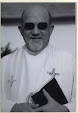
- Father Bob+
- I am a retired public school teacher who spent the last seven years of my career as a principal in a local public high school district. I am now completing a 15 year ministry as the rector of an amazing Episcopal congregation in Redondo Beach called Christ Church. Now as I begin my new life as a retired and re-fired Episcopal priest in the Diocese of Los Angeles, I look forward to new adventures of service to the One whose love has been ever with me.

No comments:
Post a Comment